Business Waste Removal in Rotherhithe

Business waste removal in Rotherhithe should be practical, tidy and suited to the way local premises actually work. We handle the collection and removal of commercial waste streams for offices, shops, hospitality sites, managed buildings and mixed-use premises, with a focus on keeping clear access and reducing disruption. The service is built around straightforward loading, responsible sorting and the safe removal of unwanted business materials from places where space, timing and discretion matter.
If you need routine clearance or a one-off uplift, we can help with items that no longer belong on site, including office furniture, packaging, fixtures, equipment and general non-hazardous business rubbish. Where a business has several waste types to clear, we can organise the work so that recyclable materials, reusable items and mixed rubbish are dealt with in a sensible order. That keeps the process manageable for businesses that want a clean result without unnecessary delay.
To get started, it helps to have a quick list of the items to remove and a basic idea of access. If you are comparing options, pricing and quotes can be a useful place to begin, and you can always ask for the next available route that suits your premises. Clear instructions make it easier to plan the uplift and keep the visit efficient.
Commercial clearance for offices, shops and shared premises
Business waste removal is rarely just about taking away a few bags. Many commercial premises need a service that works around desks, stockrooms, reception spaces, staff areas and loading points without creating unnecessary interruption. Our office waste removal approach is suited to furniture, paperwork, packaging, broken equipment and redundant fittings, while still leaving room for items that should be retained or relocated elsewhere on site. For businesses making space for new layouts or refreshed stock, that practical approach matters.
Different environments need different handling. A small office may only need a single load taken away, while a larger commercial unit can involve multiple collections of mixed waste from several floors or zones. If the items are mainly office-based, the office clearance page is a natural fit; if the uplift includes desks, chairs and larger furnishings, furniture clearance explains the sort of removal work that may be involved. Both options help keep the main job focused on the items that are actually taking up room.
In many premises, the most useful result is not just clearing space but restoring order. That may mean separating everyday rubbish from items suitable for reuse or recycling, and deciding which pieces should be removed first because they block access or take up the most floor area. Our service is designed to support that process without overcomplicating it, so the work can be completed in a way that suits the building and the people using it.
What we can remove from business premises

Commercial clearances often include a mixture of small and bulky items, and the right plan depends on what is actually on site. Common requests include filing units, office chairs, shelving, packaging, cardboard, broken fixtures, old display materials and redundant stock. Where the waste is made up of larger household-style items used in staff areas, the furniture disposal page is relevant, especially when items need to be removed carefully from workspaces or communal facilities. The aim is to match the uplift to the actual load, not to force it into a one-size-fits-all job.
Some businesses also need support with specialist items that are still within the scope of non-hazardous removal. For example, redundant appliances from kitchens or break rooms may need separate handling from ordinary waste, and mixed materials may need sorting before they leave the building. Where premises include sofas, soft seating or waiting area furniture, mattress and sofa disposal offers a more specific route for those bulky pieces. Keeping those categories distinct can make the clearance more organised.
It is also worth remembering that not everything can be treated in the same way. Hazardous materials, confidential papers and certain electrical items can need different handling from ordinary office waste, so the best approach is to identify them early and plan accordingly. That does not make the service more complicated for the customer; it simply means the right items can be removed in the right way, with fewer surprises on the day.
H3: Planning a tidy collection in busy workspaces
Access, timing and preparing the area
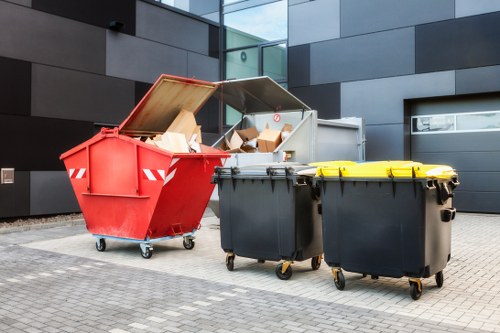
Busy workplaces tend to run better when waste removal is arranged around the realities of access. If lifts, corridors, shared entrances or loading points are involved, it helps to know that in advance so the collection can be kept orderly. A short note about which items are staying and which are going can save time on site. In practical terms, the best preparation is usually straightforward: keep the waste accessible, group similar items where possible and make sure someone can confirm the load before collection begins.
Where a business wants to minimise disruption, the collection can be organised so that the most cumbersome items are removed first and the remaining waste is dealt with after access is clearer. That is particularly useful in reception areas, back offices and customer-facing spaces where floors need to remain usable. If the job includes confidential paperwork, confidential shredding is relevant for documents that should not simply be mixed into general waste, because paper handling often needs its own route.
Good preparation is not about creating a perfect set-up; it is about making the removal straightforward enough that the crew can work cleanly and the business can get back to normal use. For many customers, that means providing a brief description of the materials, noting any access issues and confirming whether the waste is in one room or spread across the building. It is simple, but it makes a real difference to the smoothness of the visit.
Office waste, fittings and business furniture
Offices often accumulate a wider range of waste than people expect. A clearance may include desks, pedestals, chairs, cabinets, partitions, broken monitors, packaging and loose paperwork, all of which may need to be moved without disturbing remaining equipment. For premises that are refreshing layouts or replacing furnishings, the removal of old items can be just as important as the arrival of new ones. The work is most useful when it helps the space stay functional throughout the process.
If the job involves larger pieces rather than mixed rubbish, the scope may overlap with the furniture clearance and furniture disposal services, both of which are suited to desks, seating, storage and other bulky fittings that need to be taken away in a controlled manner. That matters in offices, studios and back-of-house rooms where heavy objects can quickly become an obstacle. A measured approach keeps the route clear and the remaining furniture protected.
Some sites also need help clearing offcuts, old display items or redundant supplies before a refurbishment or move. In those situations, the useful part of the service is not only removing the waste itself but understanding which items should be grouped together for easier loading. The result is a cleaner handover, whether the space is being reoccupied, reconfigured or simply kept in better working order.
Recycling, sorting and responsible disposal
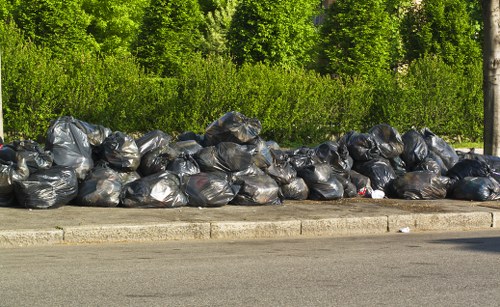
When commercial waste is removed, there is usually value in sorting materials before they leave the site. Cardboard, metal, plastics, furniture and mixed rubbish do not all belong in the same stream, and separating them where practical helps keep the clearance more orderly. Our approach to business waste removal includes a sensible focus on sorting and disposal so that reusable or recyclable materials are not treated in the same way as everything else. That gives the process a clearer structure.
Where a business wants to understand how materials are handled after collection, the recycling and sustainability page provides a helpful overview of the broad approach to responsible disposal. For some customers, that matters just as much as the removal itself, especially when regular clearances generate a steady flow of packaging and office waste. It is sensible to know that the service is organised around appropriate disposal routes rather than simple loading alone.
Responsible disposal also means recognising when an item needs a different route altogether. Electrical equipment, sharps, hazardous contents and certain confidential materials should not be mixed into ordinary commercial rubbish. If those items are present, they should be identified before the collection so that the service remains suitable and the load can be handled in the right way. That kind of attention keeps the work practical and avoids unnecessary complications later on.
About Rotherhithe
Rotherhithe is a riverside district in south-east London, on the south bank of the Thames within the London Borough of Southwark. Its history is closely tied to the river, docks and trade, and the area still carries many traces of that maritime past. The Rotherhithe Tunnel, opened in 1908, links the district to the north bank and remains one of the best-known pieces of transport infrastructure associated with the area. Close by, the former docks have given way to residential streets, waterside paths and redevelopment, yet the relationship with the river is still central to the place’s character. Surrey Quays and Canada Water sit nearby, and the wider neighbourhood includes a mixture of historic fragments and later urban change. One of the most distinctive landmarks is St Mary’s Church, whose present building dates from the early 18th century and whose churchyard contains memorials linked with the district’s long seafaring connections. The Mayflower connection is also part of Rotherhithe’s identity, with local references to the voyage of 1620 and the broader story of London’s port history. Around the waterfront, the Thames Path, Southwark Park and the remaining dockside edges give the area a varied sense of open space and movement. There are also streets of late 19th and 20th century housing, former industrial plots and newer developments that reflect how the riverside has changed over time. As a place, Rotherhithe combines working-river history, residential growth and a strong sense of location beside the Thames, making it distinct within Southwark and recognisable well beyond it.
Household-style clearances within commercial sites
Not every business waste job is made up of office items alone. Staff rooms, shared kitchens, furnished break areas and managed buildings can produce clearance needs that look more like domestic waste, even though the work is commercial in nature. That is where the broader home clearance and house clearance routes can be relevant as descriptive references for larger mixed loads, especially where soft furnishings, small appliances or general household-style items are involved on a business site.
For other bulky items that need to go quickly and cleanly, flat clearance and garage clearance show the sort of structured removal that may be suitable for storage-heavy spaces, ad hoc overflow rooms or premises with accumulated stock and equipment. These pages are useful when the job involves a mixture of contents rather than a single category of waste, because the clearance can then be considered as a whole rather than item by item.
Where a business premises has been used for years, the useful approach is often to break the load into sensible groups: furniture, general waste, appliances and items that need special handling. That makes it easier to choose the right route for each category and to keep the collection efficient. It also helps the business decide what should be removed immediately and what can be managed as part of a staged clearance if required.
More than one type of waste may need attention

Commercial sites can generate mixed waste after redecoration, refurbishment or a change of use. A back office might contain redundant chairs and storage; a stockroom may hold packaging and damaged items; a reception area could include furniture that no longer fits the layout. In those cases, the most useful service is one that can deal with the whole load sensibly rather than asking the customer to split everything in advance. The emphasis stays on getting the premises cleared in a way that works for the building and the business.
When the job includes building-related materials, it may overlap with the builders waste clearance page, which is helpful for rubble, offcuts and other post-work debris. If the clearance is more general, the broader waste removal service can cover mixed non-hazardous loads. This flexibility is useful when the contents of a site change over time and the same collection needs to handle several kinds of waste at once.
Whatever the mix, the aim is to keep the process practical and well organised. That means looking at access, identifying any awkward items and planning the clearance so the waste is removed without creating extra work for the customer. If you are ready to move things forward, ask for a quotation and share the basic details of the load. It is a simple next step, and it helps turn an untidy space into a manageable job.
Business premises, appliances and specialist items
Some commercial waste jobs include items that sit between general rubbish and dedicated specialist disposal. Fridges, freezers and other appliances from staff kitchens or break rooms may need a separate removal route, especially when they are bulky or awkward to move. In those situations, fridge and appliance removal is the relevant service reference, because appliances often require more care than ordinary office waste and should not simply be treated as mixed rubbish.
Where the site contains items that are not appropriate for general clearance, the right course is to identify them early and decide whether they belong within a specialist disposal stream. This can also apply to materials that are larger than expected or difficult to lift through ordinary access routes. A measured process helps keep the remaining site safe and reduces the chance of unnecessary handling on collection day. It is better to group these items first than to leave them hidden at the back of a store room.
If your premises are being emptied in stages, it may be helpful to separate standard waste from any items that need a more specific treatment. That can make it easier to schedule collections around trading hours or building access. For many businesses, the key benefit is simply knowing that the clearance can adapt to the contents rather than forcing everything into one generic category.
Enquiries, access notes and quotation details
When you request a quotation for business waste removal, the most useful information is usually practical rather than lengthy. A short description of the items, the number of areas involved and any access restrictions is enough to begin. If there are bulky pieces, narrow corridors, stairs or controlled entry points, mentioning them early helps the collection be planned with less guesswork. That keeps the process tidy and saves time for everyone involved.
For businesses that want to arrange the work online, book online is a convenient reference, while contact us is the clearest route when you are ready to discuss the details directly. If you are comparing options across several pages, you may also find about us useful for broad background and insurance and safety helpful for understanding how safety considerations are approached. Those pages support the decision-making process without distracting from the main task.
Request a quotation when you are ready to clear the waste and make the space easier to use again. A short note about the load is enough to begin, and it is often the fastest way to decide how the collection should be handled. Plain details, clear access and a practical timeline usually make the whole job easier to organise.